> ## Documentation Index
> Fetch the complete documentation index at: https://docs-v1.latitude.so/llms.txt
> Use this file to discover all available pages before exploring further.
# LLM-as-Judges
> Use language models to evaluate the quality, style, and correctness of prompt outputs.
* **How it works**: Uses another language model (the "judge") to score or critique the output of your target prompt based on specific criteria (e.g., helpfulness, clarity, adherence to instructions).
* **Best for**: Subjective criteria, complex assessments, evaluating nuanced qualities like creativity or tone.
## Setup
Go to evaluations tab on a prompt in one of your projects.
On the top right corner, click on the "Add evaluation" button.
Choose "LLM-as-a-judge" tab in the evaluation modal. 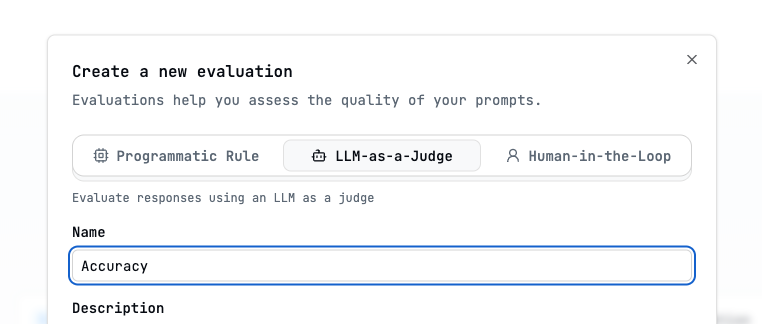
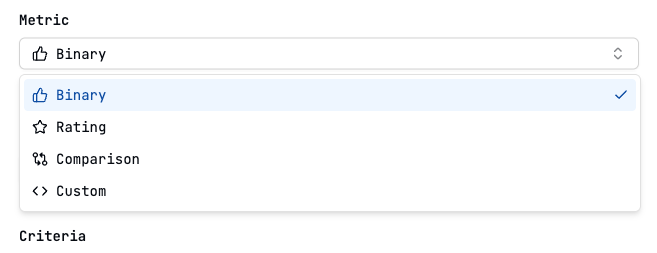 ## Metrics
Judges whether the response meets the criteria. The resulting score is
"passed" or "failed"
Judges the response by rating it under a criteria. The resulting score is the
rating
Judges the response by comparing the criteria to the expected output. The
resulting score is the percentage of compared criteria that is met
Judges the response under a criteria using a custom prompt. The resulting
score is the value of criteria that is met
## Expected output
The expected output, also known as label, refers to the correct or ideal response that the language model should generate for a given prompt. You can create datasets with expected output columns to evaluate prompts with ground truth.
**Comparison** and **Custom (labeled)** metrics require an expected output.
## Templates
We have a list of pre-configured LLM-as-a-judge templates that you can use to quickly set up evaluations. These templates cover common evaluation scenarios and can be customized to fit your specific needs.
* **Adaptability**
Evaluate how well the response adapts to user preferences or context
* **Bias and Fairness**
Assess whether the response is free of bias or unfair generalizations
* **Coherence and Fluency**
Evaluate the clarity and flow of the response
* **Conciseness**
Assess whether the response is brief but informative
* **Consistency**
Check if the response is consistent with prior information or context
* **Creativity**
Evaluate the originality and imagination shown in the response
* **Domain Expertise**
Assess the response for accuracy and knowledge in a specific domain
* **Engagement or User Experience**
Rate how well the response engages the user or enhances the conversation
* **Error Handling and Recovery**
Evaluate how well the response corrects user errors or misunderstandings
* **Ethical Compliance**
Determine if the response follows ethical standards
* **Explainability**
Rate how clearly the response explains the concept or information
* **Factuality**
Evaluates whether the following response is factually accurate
* **Faithfulness to Instructions**
Assess how well the response follows the given instructions
* **Helpfulness and Informativeness**
Rate how helpful and informative the response is
* **Formality and Style**
Evaluate whether the response matches the desired formality or style
* **Hallucination Detection**
Detect if the response introduces unsupported or false information
* **Harmlessness and Ethical Considerations**
Check if the response promotes ethical and non-harmful behavior
* **Novelty**
Assess the originality of the response in its content or style
* **Humor or Emotional Understanding**
Rate whether the response appropriately uses humor or addresses emotional content
* **Helpfulness and Informativeness**
Rate how helpful and informative the response is
* **Redundancy**
Check if the response repeats information unnecessarily
* **Relevance**
Rate how well the response addresses the given context or query
* **Response Time or Latency**
Measure whether the response time is suitable for real-time interaction
* **Satisfaction**
Rate overall satisfaction with the response
* **Specificity**
Evaluate how specific and relevant the response is to the query
* **Long-Term Consistency (in Multi-turn Dialogues)**
Check if the response remains consistent over multiple turns of dialogue
* **Novelty**
Assess the originality of the response in its content or style
* **Persuasiveness**
Rate how convincing the response is
* **Toxicity and Safety**
Check if the response contains harmful or inappropriate content
* **Uncertainty or Confidence**
Evaluate if the response expresses appropriate confidence or acknowledges uncertainty
* **Redundancy**
Check if the response repeats information unnecessarily
* **Relevance**
Rate how well the response addresses the given context or query
* **Response Time or Latency**
Measure whether the response time is suitable for real-time interaction
* **Satisfaction**
Rate overall satisfaction with the response
* **Specificity**
Evaluate how specific and relevant the response is to the query
* **Toxicity and Safety**
Check if the response contains harmful or inappropriate content
* **Uncertainty or Confidence**
Evaluate if the response expresses appropriate confidence or acknowledges uncertainty
## Metrics
Judges whether the response meets the criteria. The resulting score is
"passed" or "failed"
Judges the response by rating it under a criteria. The resulting score is the
rating
Judges the response by comparing the criteria to the expected output. The
resulting score is the percentage of compared criteria that is met
Judges the response under a criteria using a custom prompt. The resulting
score is the value of criteria that is met
## Expected output
The expected output, also known as label, refers to the correct or ideal response that the language model should generate for a given prompt. You can create datasets with expected output columns to evaluate prompts with ground truth.
**Comparison** and **Custom (labeled)** metrics require an expected output.
## Templates
We have a list of pre-configured LLM-as-a-judge templates that you can use to quickly set up evaluations. These templates cover common evaluation scenarios and can be customized to fit your specific needs.
* **Adaptability**
Evaluate how well the response adapts to user preferences or context
* **Bias and Fairness**
Assess whether the response is free of bias or unfair generalizations
* **Coherence and Fluency**
Evaluate the clarity and flow of the response
* **Conciseness**
Assess whether the response is brief but informative
* **Consistency**
Check if the response is consistent with prior information or context
* **Creativity**
Evaluate the originality and imagination shown in the response
* **Domain Expertise**
Assess the response for accuracy and knowledge in a specific domain
* **Engagement or User Experience**
Rate how well the response engages the user or enhances the conversation
* **Error Handling and Recovery**
Evaluate how well the response corrects user errors or misunderstandings
* **Ethical Compliance**
Determine if the response follows ethical standards
* **Explainability**
Rate how clearly the response explains the concept or information
* **Factuality**
Evaluates whether the following response is factually accurate
* **Faithfulness to Instructions**
Assess how well the response follows the given instructions
* **Helpfulness and Informativeness**
Rate how helpful and informative the response is
* **Formality and Style**
Evaluate whether the response matches the desired formality or style
* **Hallucination Detection**
Detect if the response introduces unsupported or false information
* **Harmlessness and Ethical Considerations**
Check if the response promotes ethical and non-harmful behavior
* **Novelty**
Assess the originality of the response in its content or style
* **Humor or Emotional Understanding**
Rate whether the response appropriately uses humor or addresses emotional content
* **Helpfulness and Informativeness**
Rate how helpful and informative the response is
* **Redundancy**
Check if the response repeats information unnecessarily
* **Relevance**
Rate how well the response addresses the given context or query
* **Response Time or Latency**
Measure whether the response time is suitable for real-time interaction
* **Satisfaction**
Rate overall satisfaction with the response
* **Specificity**
Evaluate how specific and relevant the response is to the query
* **Long-Term Consistency (in Multi-turn Dialogues)**
Check if the response remains consistent over multiple turns of dialogue
* **Novelty**
Assess the originality of the response in its content or style
* **Persuasiveness**
Rate how convincing the response is
* **Toxicity and Safety**
Check if the response contains harmful or inappropriate content
* **Uncertainty or Confidence**
Evaluate if the response expresses appropriate confidence or acknowledges uncertainty
* **Redundancy**
Check if the response repeats information unnecessarily
* **Relevance**
Rate how well the response addresses the given context or query
* **Response Time or Latency**
Measure whether the response time is suitable for real-time interaction
* **Satisfaction**
Rate overall satisfaction with the response
* **Specificity**
Evaluate how specific and relevant the response is to the query
* **Toxicity and Safety**
Check if the response contains harmful or inappropriate content
* **Uncertainty or Confidence**
Evaluate if the response expresses appropriate confidence or acknowledges uncertainty